Foreign direct investment (FDI) to Japan - statistics & facts
Contrary to Japan’s role as a leading foreign direct investor globally and relative to the size of the country's economy, its level of inward foreign direct investment (FDI) can be considered low. Japan’s inward FDI position amounted to around five percent of its GDP in 2024, compared to 56 percent in the United States, the largest recipient of FDI worldwide. To support economic growth, Japan aims to attract significantly more foreign investment in the coming years. At the same time, the government has introduced more restrictive FDI regulations amid geopolitical tensions. Recently, Alimentation Couche-Tard’s attempt to acquire Seven & I Holdings made headlines as the potentially largest foreign acquisition in Japan’s history.
Reinvestment of earnings represented the largest component of FDI flows to Japan in 2024, followed by equity. Non-manufacturing industries received the biggest share of inward FDI, with the largest amount of investments recorded in the finance and insurance industry. Broken down by economy, Hong Kong, Switzerland, and France were the biggest sources of FDI inflows.
Canadian-based Alimentation Couche-Tard’s attempt to take over Seven & I Holdings, owner of convenience store chain 7-Eleven, was met with some opposition. Following the offer, Seven and I Holdings turned to the government to seek protection under the Foreign Exchange and Foreign Trade Act (FEFTA) and was classified as a company that engages in businesses critical to national security in September 2024. Alimentation Couche-Tard withdrew its offer in 2025.
More recently, the government has announced plans to raise Japan’s inward FDI position to 150 trillion Japanese yen by the mid-2030s, almost triple the amount of figures reported by the government in 2024. Given the size of FDI inflows to Japan in the last decade, it remains to be seen whether this ambitious goal can be reached.
Development of inward FDI to Japan
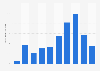
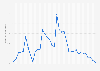
In 2024, FDI inflows to Japan reached around 13.4 billion U.S. dollars, declining for the third consecutive time. Japan’s inward FDI stock declined to 207.4 billion dollars in the same year, making up around 0.4 percent of the total global FDI.Reinvestment of earnings represented the largest component of FDI flows to Japan in 2024, followed by equity. Non-manufacturing industries received the biggest share of inward FDI, with the largest amount of investments recorded in the finance and insurance industry. Broken down by economy, Hong Kong, Switzerland, and France were the biggest sources of FDI inflows.
Openness towards FDI
According to the FDI Regulatory Restrictiveness Index, Japan can be considered open towards FDI and ranks high in the global FDI confidence index. The country offers a stable environment for foreign investors and has created a range of incentives to promote Japan as a destination for FDI.Canadian-based Alimentation Couche-Tard’s attempt to take over Seven & I Holdings, owner of convenience store chain 7-Eleven, was met with some opposition. Following the offer, Seven and I Holdings turned to the government to seek protection under the Foreign Exchange and Foreign Trade Act (FEFTA) and was classified as a company that engages in businesses critical to national security in September 2024. Alimentation Couche-Tard withdrew its offer in 2025.
More recently, the government has announced plans to raise Japan’s inward FDI position to 150 trillion Japanese yen by the mid-2030s, almost triple the amount of figures reported by the government in 2024. Given the size of FDI inflows to Japan in the last decade, it remains to be seen whether this ambitious goal can be reached.